Mastery in Saddle
Nolan O'Connor
| 16-04-2026
 · Lifestyle Team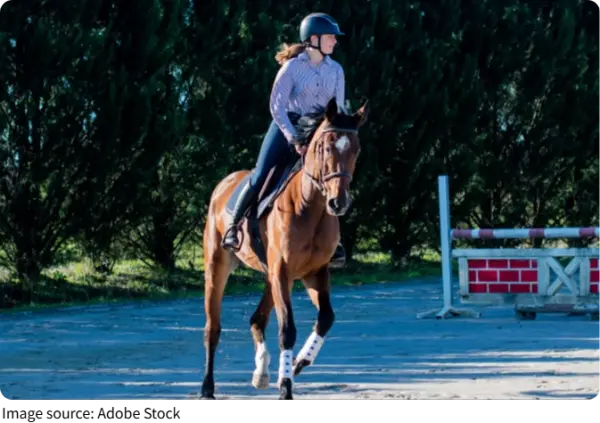
Riding is not merely sitting on a horse; it is a silent conversation conducted through subtle shifts in weight and pressure.
The moment you swing your leg over the saddle, you cease to be a passenger and become a pilot of a thousand-pound athlete.
Whether you are navigating a dusty trail or a manicured arena, your success depends on your ability to synchronize your body with the horse's natural rhythm.
The Foundation of Balance
Everything in riding begins with the "neutral spine" and the "vertical line." A common mistake for beginners is to hunch forward or lean too far back, which confuses the horse's center of gravity. You should imagine a straight line running from your ear, through your shoulder and hip, down to your heel.
When the horse moves, your pelvis must act as a shock absorber. Instead of stiffening your lower back, allow your hips to follow the circular motion of the horse's gait. By staying "deep" in the saddle and keeping your weight distributed evenly across your seat bones, you provide the horse with a stable platform. This physical alignment is the primary signal to your horse that you are a balanced, calm leader.
The Language of the Legs
Your legs are the steering wheel and the gas pedal of the horse. In professional riding, we refer to this as "applying aid." It is never about kicking; it is about rhythmic pressure and release.
1. The Forward Cue: Gently squeeze with both calves at the girth to ask for a transition to a faster gait.
2. Steering with Pressure: To turn left, apply pressure with your right leg slightly behind the girth to "push" the horse's haunches over, while maintaining a steady left rein.
3. The Anchor: Keeping your heels down is not for aesthetics; it locks your leg into a secure position, ensuring you don't get bounced out of the stirrups during a sudden trot or spook.
Precision with the Reins
The reins are the most sensitive point of contact. Many riders make the mistake of using the reins for balance, but your balance should come from your core and legs. The reins are purely for direction and deceleration.
1. Soft Contact: You should maintain a "straight line" from your elbow to the horse's mouth. The tension should be light, as if you are holding a delicate thread.
2. The Pull-Release Cycle: When asking a horse to slow down, apply steady pressure to the reins, but the moment the horse responds, you must release. This "release" is the horse's reward and is the only way they learn.
3. Opening Rein: For beginners, an "opening rein"—moving your hand away from the horse's neck in the direction you want to go—is the clearest way to guide a turn without pulling backward.
Mastering the Gaits
As you progress from a walk to a trot or a canter, the mechanics of your body must adapt to the increasing energy.
1. The Walk: A four-beat rhythm where your hips should swing freely.
2. The Trot: A two-beat gait that is famously bouncy. To master this, you must learn to "post"—rising out of the saddle every other beat to match the horse's momentum.
3. The Canter: A three-beat rocking motion. Here, you sit deep and allow your hips to follow the large, sweeping strides of the horse.
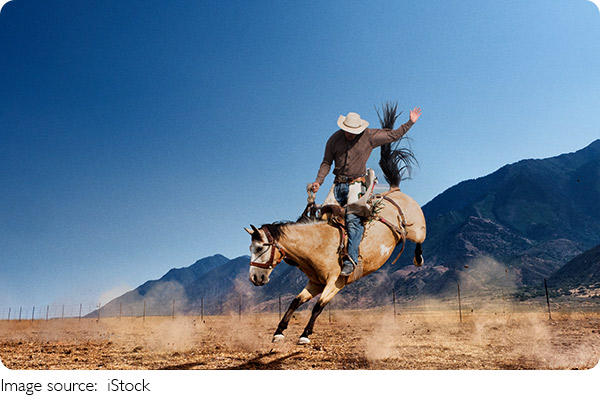
Riding is a humbling pursuit that reminds us that we are never truly in total control. We are partners with a creature that has its own thoughts and fears. The best riders are those who listen more than they command, using the subtle physics of their own bodies to guide the horse toward a shared destination. In the end, the greatest reward of the saddle isn't the speed or the trophies, but the moment you and the horse move as a single, harmonious shadow across the ground.