Yellow Baboon Drama

Liam Reilly
| 05-08-2026
 · Animal Team
Lykkers, have we ever imagined seeing a small animal challenge a much larger predator family?
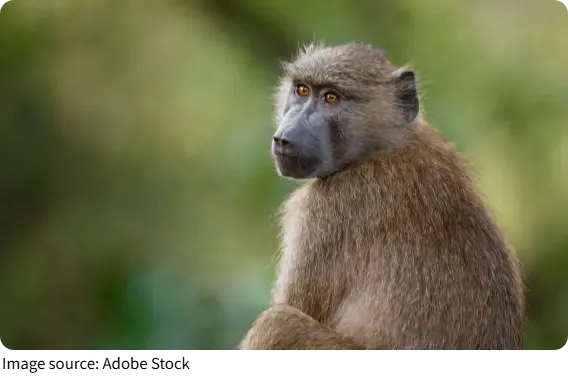
Nature often gives us scenes that are difficult to understand at first glance. Today, we are exploring the unusual behavior of the yellow baboon, an intelligent animal that lives across African grasslands.
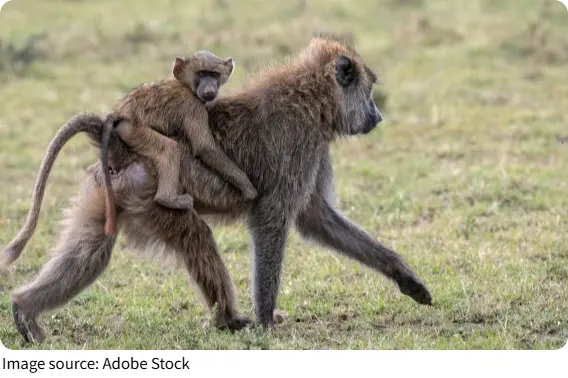
Their actions can surprise us because they combine curiosity, teamwork, and strong survival skills. Yellow baboons, also known as savanna baboons, usually live in groups. We can see them traveling together, searching for food, caring for younger members, and watching carefully for possible dangers. Their world is full of decisions, and every movement can affect the safety of the whole group.
The Smart Life Of Yellow Baboons
When we learn more about yellow baboons, we discover that they are highly adaptable creatures. They communicate with different sounds, body movements, and social signals. They remember important events and can react quickly when facing challenges.
Although they are not the largest animals in the grassland, yellow baboons have confidence and intelligence. They sometimes approach larger hunters when they feel their group is in danger. These actions show that survival in nature is not only about size. Quick thinking and teamwork are also important.
For us, observing these animals helps us understand that every creature has developed special ways to live in its environment.
An Unexpected Meeting In The Grassland
A surprising scene happened in South Africa’s Kruger National Park. A young lion cub, only around one month old, was separated from its mother for a short time while she searched for food. During this quiet moment, a group of yellow baboons passed nearby and noticed the small cub.
Several young baboons moved closer to investigate. The tiny lion was unfamiliar to them, and their curiosity quickly grew. The cub was too young to protect itself and could only react to the strange situation around it.
Then, one male baboon reached out and carried the little lion into a nearby tree. The cub moved its small paws and looked confused as it was taken away from the ground.
Curiosity Among The Trees
High above the grassland, the male baboon continued observing the cub. He moved between branches while holding the young animal and appeared interested in its fur and movements. The cub stayed close to the baboon because it had little ability to escape.
From our human view, the scene may seem gentle or unusual, but wildlife behavior often has many layers. Animals do not always act according to human ideas. Their choices are shaped by instinct, experience, and the need to survive.
The male baboon may have been exploring something unfamiliar rather than showing simple affection. This reminds us that nature is more complex than it first appears.
The Group Reacts To The Discovery
Soon, other yellow baboons noticed the young lion in the tree. They gathered nearby and made different sounds while watching the situation. The male baboon then moved with the cub to another tree, keeping the unusual discovery away from the others.
The young lion appeared nervous and continued staying close to the male baboon. At this early stage of life, the cub still needed care from its mother. Without returning to its family, the situation could become difficult. This moment shows us how quickly conditions can change in the natural world. A peaceful afternoon can become a serious challenge within minutes.
Understanding Animal Behavior
Many people may wonder why the yellow baboon acted this way. Researchers explain that animal actions can come from many reasons, including curiosity, past experiences, and natural habits. Yellow baboons are flexible eaters and have complex relationships with the animals around them.
They can remember threats and react based on what they have experienced before. Their behavior is not always easy for us to judge because wildlife follows its own patterns.
Lessons From Nature
Lykkers, the meeting between a yellow baboon and a lion cub gives us a chance to think about the amazing balance of nature. Every animal has its own challenges, skills, and role in the environment.
Wildlife stories like this remind us to observe carefully and respect the natural world. Instead of seeing animals through simple ideas, we can learn to understand their behavior with more curiosity and patience.
What do you think about this unusual encounter? Share your thoughts with us, and let us continue discovering the fascinating stories hidden in nature together.