Pallas's Cat Secrets

Naveen Kumar
| 20-08-2026
 · Animal Team
Have you ever seen a wild cat that looks like a fluffy ball with a permanently serious expression? The Pallas’s cat, also known as the manul, is exactly that kind of animal.
Its short legs, round body, thick coat, and unusual face make it look almost like a cartoon character. But when we look beyond its cute appearance, we find a highly adapted hunter with some surprisingly clever habits.
Built for Cold Lands
The Pallas’s cat is a small wild cat that lives in cold and dry environments. We can find it in rocky landscapes, open grasslands, dry plains, and high mountain areas where temperatures can change greatly between day and night.
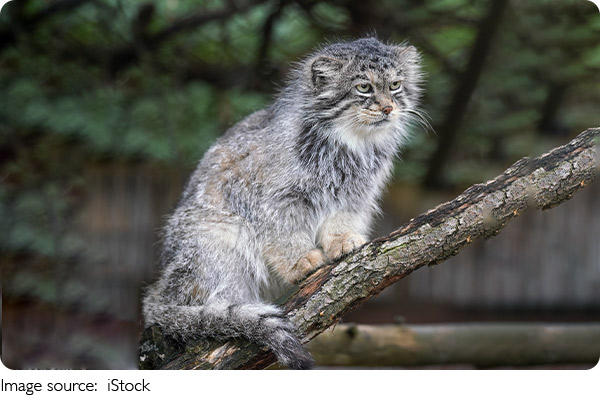
To handle these conditions, the species has developed a very thick and long coat. The fur beneath its body is especially dense, helping separate it from cold ground when it rests. Its small size also helps it move through narrow spaces and use natural shelters.
The body usually measures around 46 to 65 centimeters in length, while its weight is often about 2.5 to 4.5 kilograms. Because its legs are short and its coat is so full, the animal can look much rounder than it really is.
A Very Serious Expression
One of the first things we notice is its face. The Pallas’s cat often looks as if it has just received some very disappointing news.
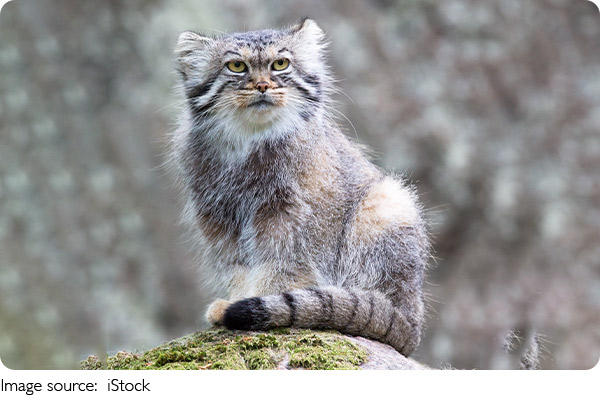
Its broad head, small rounded ears, low forehead, and thick fur around the cheeks create this serious appearance. However, we should not assume that the animal is constantly angry. Its expression mainly comes from its natural body structure.
This creates a funny contrast. We see a small, soft-looking animal with an expression that seems far more serious than its size suggests. That combination has made the Pallas’s cat especially popular among wildlife lovers.
Small but Confident
Although it is small, the Pallas’s cat is a capable hunter. It usually lives alone and carefully uses its surroundings while searching for food.
Its prey can include small mammals, birds, lizards, insects, and other creatures available in its habitat. Since food may not always be easy to find, patience becomes an important part of its daily life.
If another animal comes too close, the cat may show its teeth, make warning sounds, or try to make itself appear more threatening. Yet it also knows when to retreat. For a small hunter, avoiding an unnecessary confrontation can be just as useful as standing its ground.
A Quiet Night Hunter
The Pallas’s cat is often most active around dawn, dusk, and nighttime. During brighter hours, it may rest among rocks or inside sheltered spaces.
Its hunting style depends heavily on patience. Instead of running around in search of prey, it can remain still and wait for the right opportunity. Its thick coat and padded feet also help keep its movements quiet.
When the distance becomes suitable, it can suddenly rush forward and catch its target. This low-key approach allows us to see how a small predator can succeed without relying on speed alone.
Why the Cave Bandit?
Here comes the most amusing part of the story. The Pallas’s cat is sometimes jokingly called a “cave bandit” because it makes good use of underground shelters.
Like many cats, it has curved claws that are useful for catching prey but are not ideal for digging large tunnels. However, safe shelters are extremely important. They provide places to rest, escape bad weather, avoid danger, and care for young.
So the Pallas’s cat has a clever solution: use shelters that other animals have already created.
The Marmot Connection
Marmots are excellent diggers and can create complicated underground homes. Their living areas often overlap with those of Pallas’s cats.
When an old tunnel is left unused, it can become a convenient shelter for a Pallas’s cat. The cat saves time and energy by moving into a ready-made space instead of creating one from scratch.
Sometimes, however, this relationship becomes a little more interesting. A Pallas’s cat may take over a shelter that is still being used. This cheeky behavior is one reason wildlife fans have given it the playful “cave bandit” nickname.
Cute, Clever, and Adaptable
When we put everything together, the Pallas’s cat becomes much more than a funny-looking wild cat. Its thick coat protects it from cold conditions, its quiet movements support hunting, and its careful use of shelters helps it handle a demanding environment.
Its serious expression may make us laugh, but its lifestyle shows how much skill can exist inside such a small body. It does not need to be the largest predator to succeed. Instead, it relies on patience, caution, and smart use of its surroundings.
So, Lykkers, would you still call the Pallas’s cat a grumpy ball of fur after learning about its clever survival skills? We may first notice its funny expression, but its real charm comes from the way it lives.
Small, fluffy, cautious, and occasionally cheeky, this unusual cat has earned its playful reputation. The next time we see that serious face, we can remember that behind it is a remarkable survivor with a clever way of life.